Ordered Fragments. From Forms to Form: A Conversation with Demetrio Di Grado
DOI:
https://doi.org/10.15168/xy.v11i17.3961Keywords:
cognitive infrastructure, fragment, semantics of visionAbstract
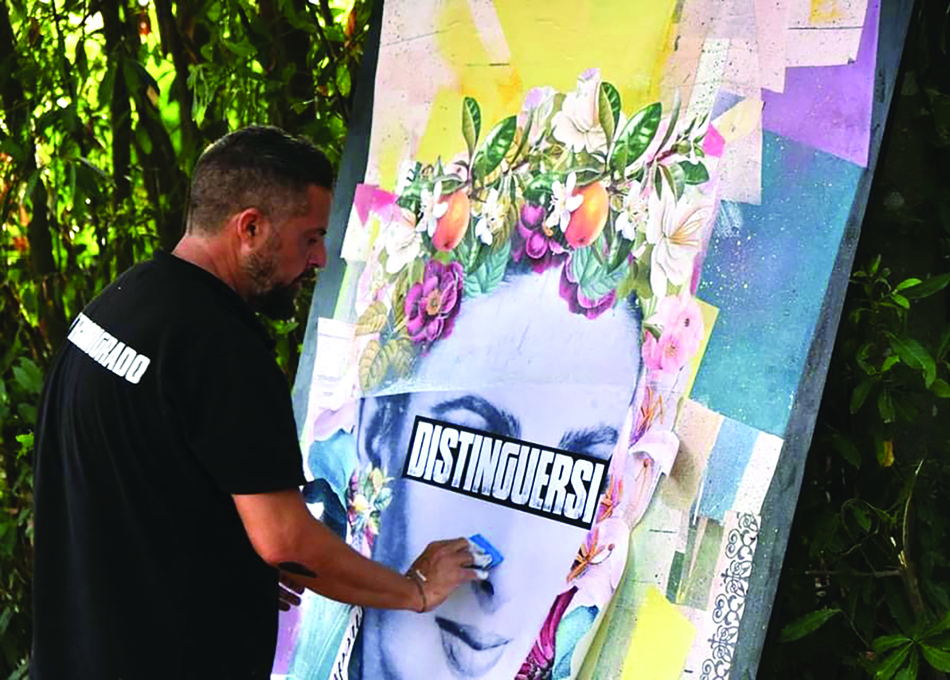
This paper examines Demetrio Di Grado’s artistic practice through the medium of analogue collage, interpreted as a cognitive and semiotic device capable of producing new visual meanings. Through processes of de-contextualisation, re-functionalisation, and re-contextualisation of fragments, the artist generates visual messages situated within contemporary social contexts. The conversation highlights a practice grounded in the recovery of materials and memory, the centrality of interpretive ambiguity, and the construction of open images, in which verbal and visual language interact to generate layered narratives. The theoretical analysis places collage in dialogue with the reflections of Lev Manovich, Marshall McLuhan, and Roman Jakobson, identifying the paper archive as an analogue database from which the artist selects and recombines elements according to a logic comparable to cultural exaptation. The fragment thus loses its original function to take on a new role within an unprecedented semantic structure, transforming the work into a dynamic system of knowledge production and social critique. The comparison between analogue collage and digital practices highlights how the materiality of paper, the thickness of the glue, and the act of cutting introduce a plastic and temporal dimension absent from algorithmic processes, reaffirming the value of physical presence in a context dominated by the dematerialisation of the image. From this perspective, collage becomes a form of poetic and cultural resistance. Demetrio Di Grado’s works ultimately operate as cognitive infrastructures that disrupt established interpretive hierarchies and prompt an active process of reconnection between data, symbols, and images. Through the rewriting of visual codes and the transformation of the historical document into a poetic device, analogue collage emerges as a practice of inter-semiotic translation and as an operational model for the production of new interpretive paradigms in the interaction between analogue culture and the digital environment.
Downloads
Published
Issue
Section
License
Copyright (c) 2026 Paola Raffa

This work is licensed under a Creative Commons Attribution-ShareAlike 4.0 International License.