From Vitruvian Firmitas to Iconic Survival: OMA’s Netherlands Dance Theater and the Afterlife of Architecture in Images
DOI:
https://doi.org/10.15168/xy.v10i16.3774Keywords:
communication, drawing, image, photography, representationAbstract
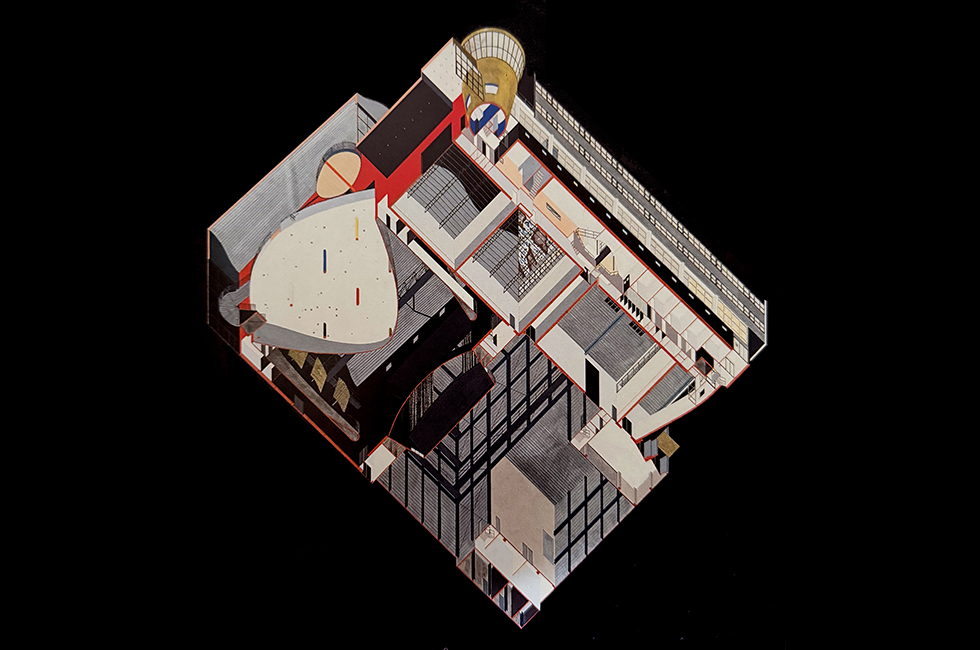
Since Vitruvius, architecture has been founded upon the principle of firmitas – the material condition of durability, stability, and permanence. In contemporary visual culture, however, shaped by dematerialization and digital circulation, architectural survival appears increasingly detached from material endurance and increasingly dependent upon the persistence of images. Drawing on the theories of Aby Warburg, Walter Benjamin, and Georges Didi-Huberman, this article examines the transformation of firmitas from a constructive principle into a symbolic condition. Warburg’s concept of Nachleben defines the survival of forms as the return of the past within the present; Benjamin identifies in images fragments of memory capable of re-emerging across time; Didi-Huberman interprets this vitality as the movement of forms across media and historical epochs. Architecture, therefore, survives not only through matter but also through representation: every drawing, photograph, model, and digital record becomes an act of resistance to cultural oblivion. The case of Rem Koolhaas and OMA’s Netherlands Dance Theater (1987–2015) provides a paradigmatic example of this condition. Demolished less than thirty years after its completion, the building continues to exist through its images: in the official photographs by Hans Werlemann and Bas Princen, in the countless photographs produced by visitors, in drawings reproduced in books and journals, and in OMA’s digital archives. Its contemporary ruin is essentially medial—an iconographic archive that extends its life beyond physical destruction. From this perspective, firmitas is transformed into a form of iconic survival: no longer the solidity of matter, but the symbolic power of visual memory. Architecture survives through its visual traces, and representation – from stone to pixel – emerges as the primary condition of its afterlife.
Downloads
Published
Issue
Section
License
Copyright (c) 2026 Fabio Quici

This work is licensed under a Creative Commons Attribution-ShareAlike 4.0 International License.