XY 17 - Raccolta delle proposte
A cura di Fabrizio Gay
Il Premio Nobel per la Chimica 2024 ha riconosciuto due strumenti fondamentali nel design computazionale delle proteine. AlphaFold, sviluppato da Google DeepMind, è un modello che predice la struttura tridimensionale e dinamica delle proteine a partire dalle sequenze amminoacidiche, con un’accuratezza comparabile ai metodi sperimentali. Rosetta, suite software sviluppata dal David Baker Laboratory dell’Università di Washington, consente la progettazione de novo di proteine, combinando modellazione fisica, algoritmi di ottimizzazione e approcci statistici, prefigurando enzimi con funzioni inedite come la degradazione di inquinanti o la neutralizzazione di virus patogeni.
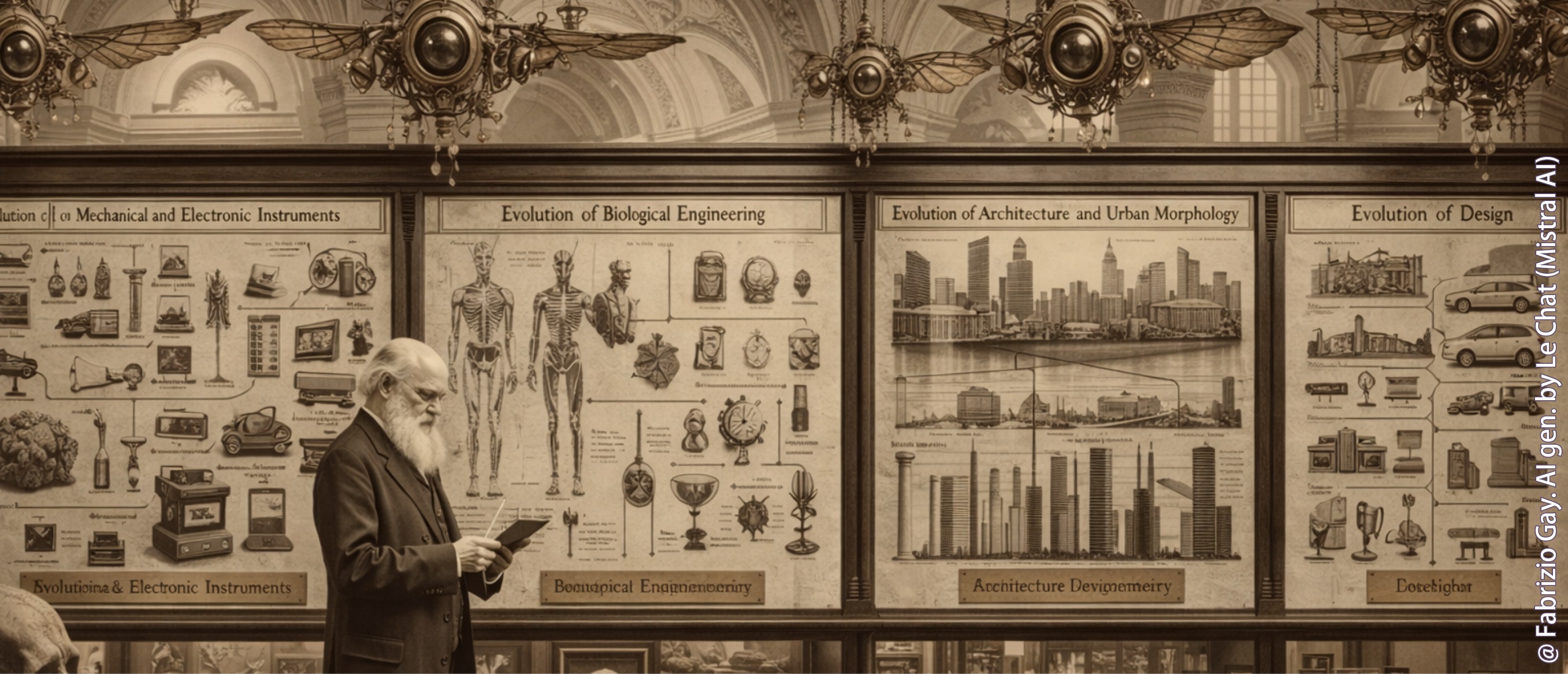
Questi sistemi rappresentano esempi paradigmatici di exaptation artificiale: AlphaFold mappa lo spazio delle proteine possibili, rivelando strutture e funzioni latenti; Rosetta ne esplora le configurazioni, riutilizzando moduli molecolari e principi fisici in combinazioni non osservate prima in natura. Pur guidati da obiettivi umani, questi strumenti operano secondo una logica adattativa, simile ai processi evolutivi che cooptano tratti preesistenti per nuove funzioni. Non creano ex novo, non progettano, ma rifunzionalizzano e ri-significano configurazioni esistenti.
Il concetto di exaptation, anticipato da osservazioni darwiniane e formalizzato in biologia da Gould e Vrba (1982), denota il riuso di tratti sviluppatisi per funzioni differenti o non adattative. Analoghe dinamiche emergono nelle teorie dell’evoluzione degli artefatti e delle forme culturali: dalla “concretizzazione” degli oggetti tecnici (Simondon; Leroi-Gourhan) ai fenomeni di “bricolage culturale” (Lévi-Strauss), dalla “trasfigurazione” del quotidiano in opera d’arte (Danto) ai processi di “traduzione” tra sistemi semiotici (Lotman; Floch; Fontanille). In tutti questi contesti emerge una logica condivisa di cooptazione, riuso, ricombinazione e ri-significazione.
Oggi l’exaptation non è solo un principio teorico, ma una logica operativa amplificata dalle capacità dei modelli di Intelligenza Artificiale generativa, come AlphaFold e i Large Multimodal Models (LMM), addestrati su basi dati eterogenee. In questi strumenti, l’exaptation guida la trasformazione di pattern informativi – immagini, stili, strutture, morfologie – su scala e velocità senza precedenti, rendendola centrale nei processi creativi e progettuali contemporanei.
Il numero 17 di «XY», aggiornando le prospettive teoriche di Roberto de Rubertis in Darwin architetto (2012), invita studiosi/e, progettisti/e, ricercatori e ricercatrici a proporre contributi che esplorino l’exaptation artificiale come principio generativo, chiave interpretativa o modello progettuale.
LE SCADENZE
- Venerdì 9 gennaio 2026 : pubblicazione della richiesta delle sintesi
- Venerdì 13 febbraio 2026: invio della sintesi. Testo in inglese e nella lingua madre dell’autore/autrice (per ciascuna lingua, massimo 2.000 battute spazi inclusi ed evitando le note al testo), una immagine con didascalia e relativi crediti. Il Comitato Scientifico e la Direzione/Redazione valutano e selezionano le proposte in base a criteri di pertinenza tematica e di chiarezza espressiva.
- Venerdì 6 marzo 2026: notifica di accettazione (o non accettazione) della sintesi
- Venerdì 1 maggio 2026: invio del saggio completo (nella lingua madre dell’autore/autrice). Testo completo di sintesi ed eventuali note (15.000-30.000 battute spazi inclusi), 8-15 immagini con didascalie e relativi crediti (circa una ogni 2.000 battute) scelte per la specifica originalità espressiva. La revisione redazionale precede quella scientifica in quanto preliminare giudizio di qualità. Gli articoli sono quindi sottoposti a revisione anonima da parte di due persone individuate per specifiche competenze, alle quali è affidato il compito di vagliare la qualità scientifica dei contributi.
- Venerdì 5 giugno 2026: notifica di accettazione (o non accettazione) del saggio / richiesta di integrazioni
- Venerdì 26 giugno 2026: invio del saggio definitivo (in inglese e nella lingua madre dell’autore/autrice). Testo completo nella lingua madre dell’autore/autrice aggiornato sulla base degli esiti della revisione scientifica; testo in lingua inglese conforme alla versione definitiva in lingua madre.
- Venerdì 17 luglio 2026: pubblicazione del numero della rivista
CONCORSO PER L’IMMAGINE DI COPERTINA – Scadenza 1 maggio 2026
Con riferimento, palese o allusivo, al tema “Exattamento artificiale”, la rivista invita le persone interessate a inviare una proposta per l’immagine di copertina (info@xydigitale.it). Tutte le immagini pervenute alla Redazione saranno sottoposte in forma anonima al giudizio del Comitato Scientifico congiunto con il Comitato dei Revisori Scientifici. L’immagine che raccoglierà maggiori preferenze sarà pubblicata in copertina, mentre le altre saranno ospitate tra le pagine dei due numeri della rivista. Ogni immagine (.jpg verticale, base 15 cm, 600 dpi, massimo 10 Mb) deve essere accompagnata da una didascalia illustrativa (.doc/.odt, circa 500 battute) che includa il nome del/della proponente e i relativi crediti (autore/autrice, titolo, anno, tecnica e fonti di riferimento).