To Depict the Landscape at the Edges, Utilizing Unconventional Maps and Graphic Experimentation Techniques
DOI:
https://doi.org/10.15168/xy.v8i14.3360Keywords:
graphic experimentation techniques, marginal landscapes, visible/invisibleAbstract
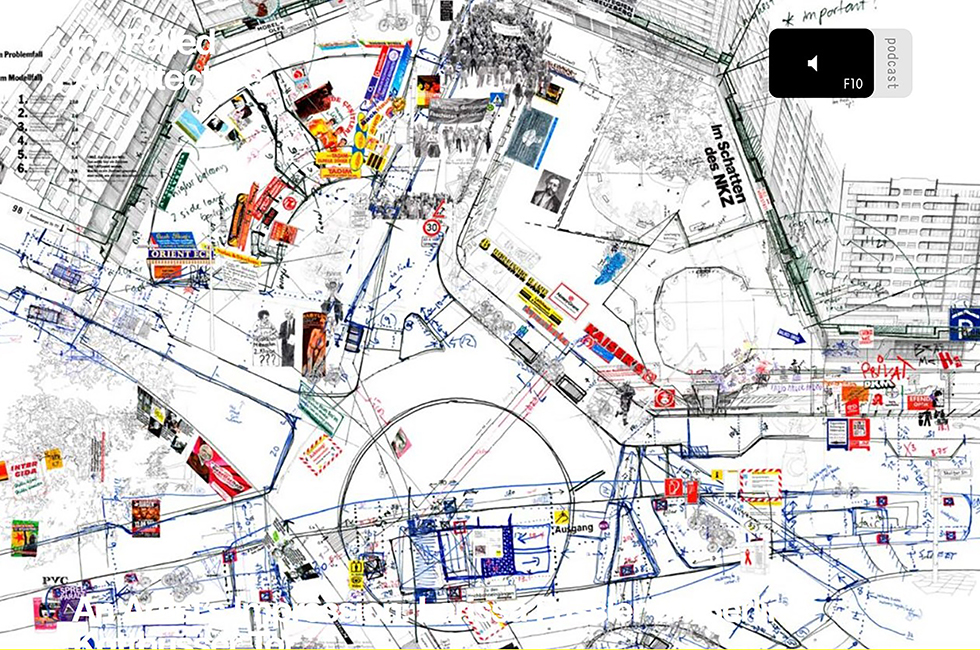
The European Landscape Convention (Florence, 2000) has extended the focus from landscapes of exceptional value to degraded territories, implicitly recognising the crucial role that all places play for the quality of life of populations, in urban and rural areas. In this cultural and social perspective, the landscapes of “everyday life”, the “abandoned” landscapes, and finally the “marginal” landscapes, are worthy of new attention. Taking up the idea of margin put in focus by Gilles Clement (Manifesto del Terzo Paesaggio, Macerata, 2005) that turns its sense from a pure residual area to a complex environment ready to unfold the maximum of its potentialities, the purpose of this contribution is to examine the role of depiction in giving shape to the landscape, giving meaning to words from the same area, and disassembling, reassembling, and giving new meanings to marginal areas (Tarpino, Il paesaggio fragile, Torino, 2016). The need to clarify the relationship - between visible and invisible components, between material and immaterial aspects, of which residents are stakeholders holders and bearers in a living and landscape context - therefore requires attention to those forms of representation that can allow landscapes on the margins to emerge as perceived and lived, in a way that is both descriptive and proactive through the use of unconventional maps and graphic experimentation techniques that leave room for multiple interpretations, visions and designs.
Downloads
Published
How to Cite
Issue
Section
License
Copyright (c) 2025 XY. Studies on the representation of architecture and the use of the image in science and art

This work is licensed under a Creative Commons Attribution-NonCommercial-ShareAlike 4.0 International License.